

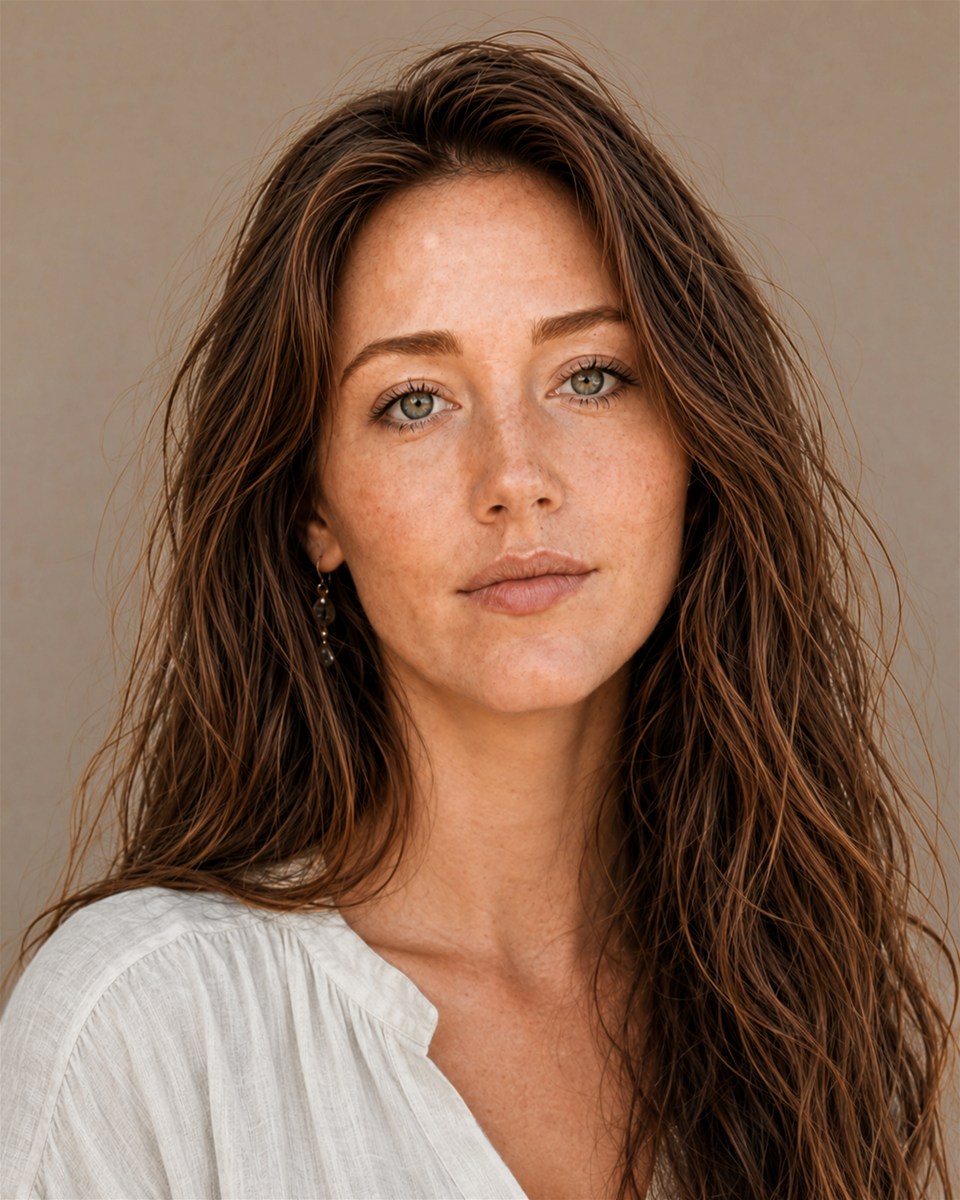
Mary Flynn is a singer, multi-instrumentalist, and songwriter in Sisters Erie. The second-oldest of the four Flynn sisters, she is from Abbeyleix, County Laois, Ireland. Her guitar, harp, and other stringed instruments contribute to the band's acoustic sound, while her warm, dark-leaning voice gives its harmonies a distinctive center.1 2
Mary is the quietest sister, but her silence usually contains something: a sound she is following, a pattern she has noticed, or a practical question she is working through. When she decides to speak, her sisters tend to listen. When she decides to make a music pun, they may regret having done so.1
Family and early career
Mary was born on 23 September 1989 at Midland Regional Hospital in Portlaoise, County Laois, and grew up in Abbeyleix, County Laois.8
Mary grew up singing and playing with Aileen, Gael, and Ryanne in a musical family. Both parents and the wider family contributed to an upbringing in which songs, instruments, and traditional stories were familiar parts of life. The band developed from that shared experience.2
By 2008–2009 the sisters were performing at school and community events. An April 2010 Laois Music Showcase appearance in Portlaoise marked a step into more formal billing; the January 2011 Danny Kyle Open Stage in Glasgow was the larger early milestone. The Coming Storm, their first EP, followed in spring 2012.3
The four-track EP gives each sister a lead. Mary's is An Ode to Nuada, which she also wrote. She shares the writing credit for The Castles of Ireland with Ryanne.4
Interests
How things work
Mary's curiosity is practical. An unfamiliar instrument, a technique, a mechanism, or a musical arrangement can draw the same sustained attention: how does it work, and could she make it work? She is interested in what an idea will do when someone actually tries it.1
That attention can make her seem comparatively quiet in a group. In a one-to-one conversation, the right subject can reveal how much thought has been accumulating. What began as a brief answer may acquire details, experiments, and connections the other person had not expected.1
Her musical knowledge has a similar effect. She often knows less-obvious material and may be sincerely surprised that someone else has never encountered it. The surprise comes from having lived with the music long enough to forget that it is obscure.1
Writing and arranging
An Ode to Nuada follows the man beneath the legendary king: what remains after a hand, a crown, and an earlier idea of oneself have been lost. As the sisters arranged it, the song became quieter. Its most direct declarations gained force when they were given room rather than made more dramatic.5
The Castles of Ireland allows a rather different part of Mary's writing to emerge. In the family's account of the song, Mary brought a graceful slow air about the Irish landscape; Ryanne supplied an increasingly impatient response to the number of ruins encountered along the way. Gael found a reel within their disagreement, and Aileen built the turn between the two halves.6
The result lets Mary's sincere landscape song remain sincere until the family abruptly changes the terms of the performance. The joke needs the opening's musicianship to work.6
Voice and instruments
Mary's singing is intimate, warm, and woody, with a dark-leaning character. It suits reflective and atmospheric material and gives the ensemble a useful harmony anchor. All four sisters are accomplished lead singers; Mary's quieter manner offstage does not limit her to accompanying the others.2 7
Her instrumental vocabulary includes guitar, harp, other strings, flute, and whistles. The choice serves the song rather than defining a single permanent stage configuration. Within the family sound, instruments have their own melodic and rhythmic work to do.1 2
Personal life
Humor
Mary's puns tend to arrive with a straight face. A useful ambiguity appears, the musical vocabulary makes it worse, and she can deliver the result before returning calmly to what she was doing. Her sisters' groans need not interrupt the process.1
The habit belongs to the same attention that shapes her musicianship: she notices how things fit together, including words. Her sisters recognize the pattern and have plenty of opportunities to groan.1